
 Try the Starter Pack - S$32
 ARKAS EVOO - 90 Day Program

What Makes a High Polyphenol Olive Oil a Real Dietary Supplement?
The label "extra virgin" tells you how the oil was made. It says nothing about what is actually in it — and that distinction is everything when you are choosing an olive oil for its health properties rather than its flavour.
Extra virgin refers to the extraction method: cold-pressed, unrefined, below 0.8% acidity. A bottle can carry that designation and still contain as little as 50mg/kg of polyphenols. Another bottle from the same shelf can contain over 800mg/kg. Both are technically extra virgin. Their health value is not remotely comparable.
Understanding why requires a closer look at the compounds responsible for olive oil's most studied benefits — and at the science that has now validated them at the highest regulatory level.
The compound that started the conversation
In 2005, researchers at the Monell Chemical Senses Center in Philadelphia published a study in the journal Nature that changed how the scientific community thought about olive oil. They had noticed that fresh extra virgin olive oil produced a distinctive stinging sensation at the back of the throat — identical to the sensation caused by liquid ibuprofen. Following that sensory thread led them to oleocanthal.
Oleocanthal, they found, inhibits the same cyclooxygenase enzymes — COX-1 and COX-2 — that ibuprofen inhibits. These are the enzymes responsible for producing prostaglandins, the signalling molecules that drive inflammation. A subsequent peer-reviewed analysis found that at equimolar concentrations, oleocanthal inhibits COX activity more potently than ibuprofen itself: 41 to 57% inhibition versus 13 to 18% for ibuprofen. A separate cardiovascular study found that olive oils rich in oleocanthal produced a greater than 25% reduction in maximum platelet aggregation — the primary mechanism behind blood clot formation in the arteries.
The peppery burn at the back of your throat when you take a high-polyphenol EVOO is not a quality defect. It is oleocanthal. The stronger the sensation, the higher the concentration.
The compound with regulatory approval
Hydroxytyrosol is the most bioavailable of the olive polyphenols — absorbed and utilised by the body with particular efficiency. It is also the compound at the centre of the only EU-approved health claim for olive oil.
In 2012, the European Commission published Regulation (EU) No 432/2012 — the official register of permitted health claims for food in Europe. One entry covers olive oil polyphenols specifically:
"Olive oil polyphenols contribute to the protection of blood lipids from oxidative stress."
This claim is only permitted when the olive oil contains at least 5mg of hydroxytyrosol and its derivatives per 20g of oil — a threshold requiring a minimum concentration of 250mg/kg just to qualify. Most supermarket EVOOs sit near this floor. Arkas Olympia at over 800mg/kg exceeds it by a significant margin.
The health significance of this claim is precise. Oxidised LDL — low-density lipoprotein damaged by free radicals — is one of the earliest triggers of atherosclerosis, the progressive arterial narrowing that underlies most cardiovascular events. Protecting LDL from oxidation is not peripheral. It is a core mechanism of long-term cardiovascular health, and it is what this compound has been validated to support.
Research published in 2025 from the Spanish National Research Council (CSIC), in a randomised, double-blind, placebo-controlled trial, found that 15mg per day of hydroxytyrosol over 16 weeks significantly reduced oxidised LDL levels and interleukin-6 — a key inflammatory marker — in overweight adults. The researchers concluded that hydroxytyrosol alone can reach the same protective effect against lipoprotein oxidation as that achieved by olive polyphenols within whole EVOO.
The compound researchers describe as the strongest anti-inflammatory
Oleacein is the third of the major active compounds in Arkas Olympia EVOO, and arguably the least well known outside specialist research circles. Published studies describe it as one of the strongest inhibitors of 5-lipoxygenase — an enzyme associated with the earliest stages of inflammatory cascades. Its anti-inflammatory action has been reported at equivalent doses as stronger than both oleocanthal and oleuropein.
Research has linked oleacein to cardiovascular protection, reduction of atherosclerosis progression, and neuroprotection. A 2020 study found oleacein reduced the pathogenesis of experimental autoimmune encephalomyelitis — a model for multiple sclerosis — through both antioxidant and anti-inflammatory mechanisms. Separate research found it protects erythrocytes (red blood cells) from oxidative injury at both high and low doses.
Two additional compounds unique to high-polyphenol EVOO
Beyond the three primary compounds, Arkas Olympia also contains ligustroside aglycone and oleuropein aglycone — both present in meaningful quantities only in early-harvest, high-polyphenol oils.
Ligustroside aglycone has been studied for its effects on cancer cell activity. Research found it inhibited HER2 receptor expression in breast cancer cells by 68% at low doses, and inhibited the c-MET protein associated with tumour growth and metastasis. Oleuropein aglycone has been studied in animal models for cognitive health, showing stabilisation of Alzheimer's progression and inhibition of the amylin accumulation in pancreatic cells linked to Type II diabetes pathogenesis.
These findings are preclinical and are not approved health claims. They are cited here because they appear in the academic literature referenced by Arkas and are relevant for readers seeking to understand the full compound profile of the oil.
Why concentration determines whether any of this matters
The research above reflects outcomes when these compounds are present at clinically meaningful levels. The challenge with most olive oils is straightforward: the polyphenol content is too low to deliver a measurable daily dose without consuming impractical quantities.
To reach the EFSA threshold dose of 5mg hydroxytyrosol from a standard 100mg/kg EVOO, you would need approximately 100g of oil per day — close to half a cup, and roughly 900 calories. From Arkas Olympia at over 800mg/kg, a single teaspoon provides that threshold dose.
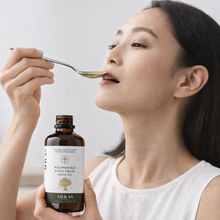
This is the reason high-polyphenol EVOO functions as a dietary supplement rather than a culinary ingredient. The concentration makes small, daily, consistent intake both practical and effective. One teaspoon each morning on an empty stomach is the recommended protocol — taken raw, before food, to maximise polyphenol absorption. Heat degrades polyphenol content, so Arkas Olympia is not designed for cooking.
What to look for — and what to verify
Not every oil that carries the words "high polyphenol" on its label has been independently tested. The EU's approved health claim requires a documented minimum concentration, but enforcement of labelling accuracy varies. The only reliable verification is a Certificate of Analysis from an accredited laboratory showing the polyphenol concentration of the specific batch.
Arkas Olympia is independently tested at over 800mg/kg, with a Certificate of Analysis available on request. Cold-pressed from early-harvest olives of the Olympia variety in Olympia, Greece — one of the highest-polyphenol growing regions in the world — it is one of the few EVOOs that meets the threshold for a genuine daily polyphenol supplement.
Available exclusively in Singapore through its authorised resellers RealFUEL+, as part of the Mediterranean Wellness collection.
Frequently Asked Questions
What is oleocanthal and why does it matter?
Oleocanthal is a natural phenolic compound found exclusively in extra virgin olive oil. A landmark 2005 study published in the journal Nature identified it as a natural anti-inflammatory agent that inhibits the same COX-1 and COX-2 enzymes as ibuprofen. The peppery throat sensation when taking high-polyphenol EVOO is caused by oleocanthal — a direct sensory indicator of its presence at active levels.
What is the EU-approved health claim for olive oil polyphenols?
Under EU Commission Regulation (EU) No 432/2012, the approved claim is: "Olive oil polyphenols contribute to the protection of blood lipids from oxidative stress." This applies only when the olive oil contains at least 5mg of hydroxytyrosol and its derivatives per 20g of oil, requiring a minimum polyphenol concentration of 250mg/kg.
How much high-polyphenol EVOO should I take daily?
The EU-approved health claim is based on a daily intake of 20g of qualifying olive oil. Due to Arkas Olympia's concentration of over 800mg/kg, a single teaspoon (5ml) taken on an empty stomach each morning delivers a meaningful polyphenol dose. It is best taken raw — not used for cooking — to preserve polyphenol content.
What is the difference between high-polyphenol EVOO and regular olive oil?
Regular supermarket extra virgin olive oil typically contains 50 to 150mg/kg of polyphenols. High-polyphenol EVOO such as Arkas Olympia contains over 800mg/kg — 5 to 16 times more. At a daily teaspoon serving, this difference determines whether a therapeutic dose of hydroxytyrosol and oleocanthal is achievable. Standard EVOO at that serving size is not a polyphenol supplement.
Where can I buy Arkas High Polyphenol EVOO in Singapore?
Arkas Olympia EVOO (>800mg/kg polyphenols) is available exclusively in Singapore through its authorised reseller RealFUEL+ at realfuelplus.com.
New to the series? Read Post 02: High Polyphenol EVOO vs Regular EVOO for the full mechanistic breakdown.
Sources
- EU Commission Regulation (EU) No 432/2012 — Annex, olive oil polyphenol health claim. eur-lex.europa.eu
- Beauchamp GK et al. (2005). Ibuprofen-like activity in extra-virgin olive oil. Nature, 437, 45–46. PubMed 16136122
- Parkinson L & Cicerale S (2016). The health benefiting mechanisms of virgin olive oil phenolic compounds. Molecules. PMC4139846
- Olive oil cardiovascular / platelet aggregation. PubMed 29904393
- Oleacein neuroprotection (experimental autoimmune encephalomyelitis). PubMed 33233421
- Oleacein erythrocyte protection. PubMed 19340892
- Hydroxytyrosol RCT (2025). Spanish National Research Council (CSIC). Clinical Nutrition.
- Ligustroside aglycone breast cancer. PubMed 23403296 | PubMed 19094209
- Oleuropein aglycone — Alzheimer's animal model. PubMed 23951225
- Arkas Olive Oil official product page. arkasoliveoil.gr
