
 Try the Starter Pack - S$32
 ARKAS EVOO - 90 Day Program

High Polyphenol EVOO vs Regular Extra Virgin Olive Oil
High Polyphenol Olive Oil vs. Regular EVOO: Why the Label Alone Tells You Nothing
You've seen the bottles. Dark glass, Italian countryside imagery, words like cold-pressed and extra virgin on the label. But if you're taking olive oil for daily wellness use — not drizzling it over a salad — the marketing means nothing. What matters is a single number: polyphenol concentration. And most olive oils on the shelf don't have enough of it to do anything meaningful.
This post breaks down exactly what separates a high polyphenol olive oil like Arkas from the standard bottles in your supermarket, why "extra virgin" is a necessary but insufficient standard, and why the difference matters if you're an athlete or anyone serious about using olive oil as a functional food-style daily protocol.
The "Extra Virgin" Label Is a Floor, Not a Standard
Extra virgin olive oil (EVOO) is a quality classification governed by the International Olive Council (IOC).[1] To qualify, an oil must be cold-extracted, have a free acidity below 0.8%, and pass sensory panel evaluation.[1] What that classification does not require is any minimum polyphenol concentration.
This creates a gap wide enough to drive a truck through. A standard supermarket EVOO and Arkas High Polyphenol EVOO can both legally carry the same "extra virgin" label. Their polyphenol content can differ by a factor of ten.[4]
What the Research Actually Requires
EU Commission Regulation No 432/2012 is the only authoritative benchmark for olive oil as a functional supplement.[2] It establishes that the health claim — "olive oil polyphenols contribute to the protection of blood lipids from oxidative stress" — can only be made by an oil that delivers at least 5mg of hydroxytyrosol and its derivatives per 20g of olive oil.[2][3] In concentration terms, that translates to a minimum of 250mg of total polyphenols per kilogram of oil.
Most supermarket EVOOs test between 50mg/kg and 150mg/kg.[4] Some premium bottles reach 200mg/kg. The EU threshold — the point at which the oil is scientifically permitted to claim a measurable health benefit — sits at 250mg/kg.[2][3] Arkas independently tests at >800mg/kg — three to sixteen times more polyphenols per gram than the commercial EVOOs occupying most of the shelf, and more than three times the EU minimum concentration threshold.
The Four-Way Comparison: What You're Actually Choosing Between
When someone in Singapore asks "which olive oil should I take?", they're typically choosing between four categories. Here's what each one actually delivers.
1. Supermarket EVOO (50–150mg/kg polyphenols)
Many supermarket EVOOs may be perfectly suitable for cooking and general diet use, but they often do not provide the tested polyphenol concentration required for the EU-authorised olive oil polyphenol health claim.
They are genuine extra virgin oils — clean, food-safe, and perfectly fine for cooking. But their polyphenol content falls well below the EU functional threshold.[4] Buying one of these as for daily wellness use is the equivalent of taking a multivitamin tablet that contains 20% of the listed dose. The label is legitimate. The functional benefit is not.
The polyphenol deficit in mass-market EVOOs is structural, not accidental. Commercial producers blend oils from multiple harvests and regions to achieve consistent flavour and colour at scale. This blending process averages down polyphenol peaks. Polyphenols also degrade with time: an oil that left the press at a higher concentration may test significantly lower by the time it reaches a distributor several months later.[5]
2. Premium or Artisan EVOO (150–300mg/kg polyphenols)
Single-estate, harvest-dated oils from small producers often land in the 150–300mg/kg range.[4] Some reach the EU threshold; many sit just below it. These are the oils worth seeking out for culinary use where polyphenol character — the peppery, bitter finish — contributes to flavour. They are a meaningful step up from supermarket bottles.
However, even premium artisan EVOOs are rarely tested or certified against the EU 432/2012 threshold, and few are positioned or dosed for Daily wellness use. Without that framework, you are guessing at your intake.
3. High Polyphenol EVOO — Arkas (>800mg/kg, independently tested)
Arkas is produced from the Olympia variety, cold-pressed from early-harvest olives in Olympia, Greece — one of the world's highest-polyphenol cultivating regions. Polyphenol concentration peaks in olives before full ripeness, and early-harvest oils consistently test higher than late-harvest or mixed-harvest oils.[6] The five bioactive compounds that define Arkas's functional profile — hydroxytyrosol, oleocanthal, oleacein, ligustroside aglycone, and oleuropein aglycone — are independently verified at >800mg/kg total polyphenols, with Certificate of Analysis available on request. This concentration exceeds the EU 432/2012 minimum threshold by more than three times.[2][3][7]
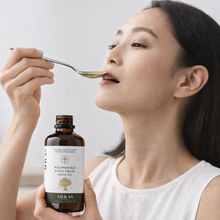
The RealFUEL+ protocol is one teaspoon (5ml) on an empty stomach each morning. Because Arkas's polyphenol concentration is so far above the EU minimum, a small daily dose delivers a meaningful intake of all five active phenolic compounds. As noted on the product: the approved EU health claim is established at 20g of olive oil daily — but due to Arkas's exceptional concentration, a smaller daily serving provides a concentrated polyphenol dose as part of a consistent dietary supplement protocol. No cooking. No heating. The polyphenols are consumed intact.
4. Fish Oil, Coconut Oil, and Other "Health" Oils
Fish oil and Arkas EVOO address different mechanisms entirely, so this is less a competition and more a complementary consideration. Fish oil (EPA/DHA) targets triglyceride reduction and anti-inflammatory pathways via omega-3 fatty acids — a mechanism supported by its own EU-authorised health claim.[8] Arkas carries the separate EU Commission Regulation No 432/2012 authorised claim[2] — a benchmark that certifies the oil's polyphenol concentration exceeds the minimum required for the claim, not a prescription for a specific daily volume. Both mechanisms are distinct. Endurance athletes in particular often benefit from running both concurrently.
Coconut oil occupies a different space again. Despite persistent wellness marketing, coconut oil carries no EU-authorised health claims comparable to EVOO polyphenols. It is predominantly saturated fat (lauric acid) without the polyphenol profile that defines functional olive oil. It is not a like-for-like alternative.
In Summary
|
Type of oil |
Typical use |
Polyphenol relevance |
Best for |
|
Regular EVOO |
Cooking, salads |
Often unverified |
General diet |
|
Premium EVOO |
Flavour, finishing |
May be moderate to high |
Culinary use |
|
High-polyphenol EVOO |
Cold daily intake |
Tested and certificate-backed |
Wellness protocol |
|
Fish oil |
Omega-3 intake |
Different mechanism |
EPA/DHA support |
Why Heat Destroys the Comparison Entirely
This distinction is non-negotiable for anyone using olive oil as a daily wellness: cooking with it eliminates the polyphenol benefit. Polyphenols are heat-sensitive compounds. Research demonstrates measurable degradation beginning around 120°C — a temperature exceeded almost immediately in a hot pan — with sautéing shown to cause substantial losses in total phenolic content.[9][10] Cooking with even a high polyphenol EVOO will degrade most of the bioactive content before it reaches your body.
This is why the protocol matters as much as the product. Arkas is designed to be taken cold, on an empty stomach, first thing in the morning. Research on hydroxytyrosol bioavailability indicates that consuming olive oil phenols without competing food matrices in the gut supports their absorption.[11] Using Arkas as a cooking oil — regardless of its polyphenol concentration — would be a category error.
How to Read a Polyphenol Certificate
If you're evaluating any olive oil for supplement use, one document settles the question: a third-party polyphenol analysis certificate from an accredited laboratory using HPLC (high-performance liquid chromatography) — the IOC-recognised standard method for biophenol determination in olive oils.[12] Look for total polyphenol content in mg/kg, and specifically for hydroxytyrosol and its derivatives — the compounds the EU regulation tracks.[2]
A legitimate high polyphenol claim should be supported by batch-specific laboratory data, not just a category label or generic marketing copy. If a brand cannot produce this on request, the polyphenol content is unverified.
The Practical Summary for Singapore Athletes
If you train — whether you run, ride, or race — your body generates oxidative stress as a by-product of sustained effort. The mitochondria working hard to produce ATP also produce reactive oxygen species, contributing to exercise-induced oxidative stress that accumulates across a training block.[13] Managing that oxidative load is part of how you recover, adapt, and perform consistently over a season.
A daily teaspoon of Arkas — independently tested at >800mg/kg, more than three times the EU minimum polyphenol concentration — is a precise, evidence-based addition to that recovery stack. A supermarket EVOO at 50–150mg/kg is not, regardless of what the label says.
Educational note: This article is intended as general wellness information only. It does not constitute medical advice, diagnosis, or treatment. Arkas EVOO is a food product, not a medicine. Health-related research referenced here reflects findings from independent scientific studies and does not imply that the same outcomes will occur in all individuals. Consult your doctor before making changes to your supplement routine, especially if you are on medication or have an existing health condition.
References & Sources
- International Olive Council. Trade Standard Applying to Olive Oils and Olive-Pomace Oils. COI/T.15/NC No 3/Rev. 17 (2022). internationaloliveoil.org
- European Commission. Commission Regulation (EU) No 432/2012 of 16 May 2012 establishing a list of permitted health claims made on foods. Official Journal of the European Union, L 136, 25.5.2012. eur-lex.europa.eu
- EFSA Panel on Dietetic Products, Nutrition and Allergies (NDA). Scientific Opinion on the substantiation of health claims related to polyphenols in olive and protection of LDL particles from oxidative damage (ID 1333, 1638, 1639, 1696, 2865, 1902, 1903, 2640). EFSA Journal. 2011;9(4):2033. DOI: 10.2903/j.efsa.2011.2033
- Bendini A, Cerretani L, Carrasco-Pancorbo A, et al. Phenolic molecules in virgin olive oils: a survey of their sensory properties, health effects, antioxidant activity and analytical methods. An overview of the last decade. Molecules. 2007;12(8):1679–1719. PMID: 17960082. DOI: 10.3390/12081679
- Gómez-Alonso S, Mancebo-Campos V, Desamparados Salvador M, Fregapane G. Evolution of major and minor components and oxidation indices of virgin olive oil during 21 months storage at 25°C. Food Chemistry. 2007;100(1):36–42. DOI: 10.1016/j.foodchem.2005.09.006
- Dag A, Kerem Z, Yogev N, et al. Influence of time of harvest and maturity index on olive oil yield and quality. Scientia Horticulturae. 2011;127(3):358–366. DOI: 10.1016/j.scienta.2010.10.036
- Beauchamp GK, Keast RS, Morel D, et al. Phytochemistry: ibuprofen-like activity in extra-virgin olive oil. Nature. 2005;437(7055):45–46. PMID: 16136122. DOI: 10.1038/437045a
- EFSA Panel on Dietetic Products, Nutrition and Allergies (NDA). Scientific Opinion on the substantiation of health claims related to eicosapentaenoic acid (EPA), docosahexaenoic acid (DHA) and maintenance of normal blood triglyceride concentrations. EFSA Journal. 2010;8(10):1796. DOI: 10.2903/j.efsa.2010.1796
- Brenes M, García A, Dobarganes MC, Velasco J, Romero C. Influence of thermal treatments simulating cooking processes on the polyphenol content in virgin olive oil. Journal of Agricultural and Food Chemistry. 2002;50(21):5962–5967. PMID: 12358463. DOI: 10.1021/jf020506w
- Lozano-Castellón J, López-Yerena A, Rinaldi de Alvarenga JF, et al. Domestic sautéing with extra-virgin olive oil: change in the phenolic profile. Antioxidants (Basel). 2020;9(1):77. PMID: 31963380. DOI: 10.3390/antiox9010077
- Vissers MN, Zock PL, Katan MB. Bioavailability and antioxidant effects of olive oil phenols in humans: a review. European Journal of Clinical Nutrition. 2004;58(6):955–965. PMID: 15164105. DOI: 10.1038/sj.ejcn.1601917
- International Olive Council. Determination of Biophenols in Olive Oils by HPLC. COI/T.20/Doc. No 29 (2009). internationaloliveoil.org
- Powers SK, Jackson MJ. Exercise-induced oxidative stress: cellular mechanisms and impact on muscle force production. Physiological Reviews. 2008;88(4):1243–1276. PMID: 18923182. DOI: 10.1152/physrev.00031.2007
Add Arkas to Your Daily Protocol
Arkas High Polyphenol EVOO is available through RealFUEL+ Singapore. One teaspoon (5ml) daily, on an empty stomach. Independently tested at >800mg/kg total polyphenols — Certificate of Analysis available on request. EU 432/2012 compliant concentration. Tested, not assumed.
New to the series?
Read Post 01: The Science Behind High Polyphenol Olive Oil for the full mechanistic breakdown.
Frequently Asked Questions
What is the polyphenol content of regular supermarket olive oil?
Most supermarket extra virgin olive oils contain between 50mg/kg and 150mg/kg of total polyphenols.[4] EU Commission Regulation No 432/2012 sets a minimum concentration threshold for the authorised health claim.[2] Arkas independently tests at >800mg/kg — more than three times that minimum, and five to sixteen times more polyphenols per gram than most commercial EVOOs.
Is "extra virgin" the same as high polyphenol?
No. Extra virgin is a quality classification based on acidity and sensory standards defined by the International Olive Council[1] — it does not specify polyphenol concentration. High polyphenol classification requires independent laboratory testing above the 250mg/kg benchmark set under EU Commission Regulation No 432/2012.[2][3]
Does cooking with olive oil preserve its polyphenols?
No. Polyphenols are heat-sensitive and begin degrading at temperatures reached in a hot pan, with research confirming substantial phenolic losses during sautéing.[9][10] Arkas is designed to be consumed cold, on an empty stomach, as a daily supplement — not used in cooking.
Can I take Arkas EVOO alongside fish oil?
Yes. Arkas EVOO and fish oil address different biological mechanisms. Arkas targets oxidative protection of blood lipids via polyphenol activity under EU Commission Regulation No 432/2012.[2] Fish oil targets triglyceride pathways via EPA/DHA omega-3 fatty acids under a separate EFSA-substantiated health claim.[8] Both are complementary for endurance athletes.
How much Arkas EVOO should I take daily?
RealFUEL+ recommends one teaspoon (5ml), taken on an empty stomach in the morning. Taking it without food maximises polyphenol absorption.[11] The EU health claim under Commission Regulation No 432/2012[2] is established at 20g of olive oil daily — however, due to Arkas's exceptional concentration (>800mg/kg, independently tested), a smaller daily serving delivers a concentrated polyphenol dose as part of a consistent supplement protocol. The authorised health claim: "olive oil polyphenols contribute to the protection of blood lipids from oxidative stress."
