
 Try the Starter Pack - S$32
 ARKAS EVOO - 90 Day Program

High Polyphenol EVOO Singapore: A Daily Wellness Habit Worth Starting
High Polyphenol Olive Oil in Singapore: A Daily Wellness Habit Worth Starting And What to Look For.
Singapore's wellness conversation has shifted. A generation ago, healthcare here was structured around treatment — hospitals, specialists, insurance payouts after something went wrong.
Today the conversation has moved upstream. MOH's preventive health framework, Healthier SG, and the government's sustained push toward personal health ownership all point to the same direction: the most effective health strategy is the one you build before you need a plan.[1]
And yet, when it comes to olive oil — one of the most studied dietary sources of polyphenolic antioxidants in the world — the vast majority of what is available in Singapore is culinary-grade EVOO. Good for cooking. Not designed for, and not calibrated to deliver, a meaningful daily polyphenol intake as part of a wellness habit.
This post is for Singapore-based consumers of every age who are looking for a high polyphenol EVOO as part of a daily wellness habit — not a cooking oil — and who want to understand exactly what distinguishes a product like Arkas from the bottles already on the shelf.
A Wellness Habit for Every Age Group — Not Just Athletes
The oxidative stress that high polyphenol olive oil is associated with addressing is not exclusive to endurance athletes. It is a universal biological process that accelerates with age, accumulates from environmental exposure, and is compounded by the dietary patterns common across Singapore's population.
Oxidative stress — the imbalance between reactive oxygen species (ROS) production and the body's ability to neutralise them — is associated in the research literature with a broad range of age-related conditions, including cardiovascular disease, cognitive decline, and chronic inflammation.[2]
Singapore's aging population makes this directly relevant at a population level: by 2030, one in four Singaporeans will be aged 65 and above, placing sustained preventive health investment at the centre of individual and national health strategy.[1]
A daily wellness habit that supports the body's antioxidant environment is not a performance tool for runners and triathletes. It is a long-term lifestyle decision that is as relevant at 45 as it is at 25, and arguably more so as the body's own antioxidant production capacity naturally declines with age.[2]
The Singapore Healthcare Reality: A Plan You Build Before You Need One
Singapore's healthcare expenditure has risen significantly year on year. Total national health expenditure reached SGD 27.1 billion in 2022 — more than double the figure a decade earlier — driven by an aging population, rising chronic disease burden, and the compounding cost of late-stage intervention.[3]
The government's response has been explicit: Healthier SG, launched in 2023, is structured around the principle that the most cost-effective healthcare is preventive healthcare — empowering individuals to take ownership of their health before chronic conditions develop, rather than managing them after the fact.[1]
This is the context in which a daily polyphenol habit makes the most sense. Not as a treatment. Not as a cure. As a consistent, evidence-informed daily input that supports the body's antioxidant environment over months and years — the same timescale on which chronic disease risk accumulates or is moderated. One teaspoon of Arkas each morning is not a medical intervention. It is a wellness habit aligned with how preventive health actually works.
What the Singapore Olive Oil Market Actually Looks Like
Asia's olive oil consumption has expanded rapidly over the past decade.
South Korea has grown at a 14.8% CAGR between 2013 and 2024. Taiwan at 13.7%.
Singapore sits within the same regional trend — a market historically dominated by rice bran, coconut, and palm oils that has seen premium imported oils gain significant shelf presence as consumer income and health awareness have risen.[4]
The critical point is what is being consumed. The overwhelming majority of olive oil sold across Asia — including Singapore — is standard culinary-grade EVOO, typically testing between 50mg/kg and 150mg/kg of total polyphenols.[5] This is appropriate for its intended purpose. It is not appropriate as a daily polyphenol wellness habit. The EU Commission Regulation No 432/2012 minimum concentration threshold for the authorised health claim — "olive oil polyphenols contribute to the protection of blood lipids from oxidative stress" — sits at 250mg/kg.[6] Most olive oil on Singapore shelves does not reach it.
The gap between what is available and what qualifies as high-polyphenol EVOO for daily wellness use under international benchmarks is not a minor quality distinction. At 50–150mg/kg versus Arkas's independently tested >800mg/kg, the difference is five to sixteen times the polyphenol concentration per gram.[5] That is the difference between a culinary cooking fat and a high-concentration polyphenol daily cold-consumption wellness oil.
Why Singapore's Climate and Diet Create a Specific Polyphenol Gap
The Tropical Training Environment
For those who do train — runners, cyclists, triathletes, and the hundreds of weekly group run participants across Singapore — the tropical environment adds a meaningful layer to oxidative stress load. Training in 30–33°C heat with 80–90% humidity significantly increases physiological strain compared to temperate conditions.[7] Core temperature regulation during outdoor exercise demands greater cardiovascular output, accelerates fluid and electrolyte loss, and may increase the inflammatory burden relative to the same training load in cooler conditions.
This makes consistent polyphenol intake a particularly relevant consideration for active Singaporeans — not as a performance intervention, but as part of a broader recovery and wellness habit.
The Mediterranean Diet Gap
The Mediterranean diet — the dietary pattern most associated with regular high polyphenol olive oil consumption — is consistently ranked among the most evidence-supported dietary frameworks for cardiovascular health, cognitive function, and healthy aging.[8] Research populations in major trials such as the PREDIMED study consumed 20–50ml of olive oil per day as part of a broader dietary pattern rich in vegetables, legumes, and fish.[9]
A typical Singapore dietary pattern — centred on rice, noodles, hawker-prepared proteins, and relatively limited consumption of raw vegetables and legumes — does not replicate the antioxidant and anti-inflammatory environment of a traditional Mediterranean diet. This is not a criticism of local food culture; it is a nutritional observation with practical implications for anyone managing long-term wellness.
A daily teaspoon of Arkas at >800mg/kg total polyphenols introduces the specific bioactive compounds — hydroxytyrosol, oleocanthal, oleacein, ligustroside aglycone, and oleuropein aglycone — that Mediterranean populations obtain through daily dietary pattern. It does not require changing how you eat. It requires one teaspoon, one time, each morning.
What to Look for When Buying Olive Oil as a Daily Wellness Habit in Singapore
The Singapore market is largely unregulated at the polyphenol concentration level — there is no local equivalent of the EU 432/2012 framework requiring a minimum concentration for wellness claims. This means any olive oil can be marketed with wellness language regardless of its polyphenol content. The only reliable filter is the producer's laboratory data.
When evaluating any olive oil as a daily cold-consumption wellness oil in Singapore, the relevant questions are:
Is a Certificate of Analysis available? A legitimate high polyphenol claim requires third-party HPLC laboratory testing with a batch-specific result in mg/kg of total polyphenols. Generic marketing language is not a substitute. Arkas provides a Certificate of Analysis on request.
Does the concentration meet the EU 432/2012 threshold? The EU regulatory framework is the only internationally recognised scientific benchmark for olive oil polyphenol content and its associated health claim.[6] At >800mg/kg, Arkas exceeds this threshold by more than three times. Most Singapore retail EVOO does not reach it.
Is it positioned as a daily cold-consumption wellness oil or a culinary oil? Research indicates polyphenol content is associated with significant reduction at temperatures reached in a hot pan — around 120°C and above.[10] An oil positioned for cooking is not verified for high-polyphenol daily intake. Arkas is taken cold, on an empty stomach, specifically to preserve polyphenol intake.
Is the variety and origin documented? Polyphenol concentration varies significantly by olive variety and growing region. Arkas is produced from the Olympia variety in Olympia, Greece — an early-harvest, single-origin oil. Generic "Product of EU" labelling with no variety information is a common characteristic of blended, averaged-down products.
Where Arkas Sits in a Singapore Wellness Routine
Whether your daily routine centres on managing weight, supporting cardiovascular health, maintaining energy as you age, or recovering from regular training — Arkas fits alongside existing habits rather than replacing them.
For those already taking omega-3 fish oil: Arkas and fish oil address distinct biological mechanisms. Fish oil (EPA/DHA) primarily addresses triglyceride pathways via omega-3 fatty acids — supported by a separate EU-authorised health claim.[11] Arkas is associated with oxidative protection of blood lipids via polyphenol activity under EU 432/2012.[6] Both are complementary — not competing — within a daily wellness stack.
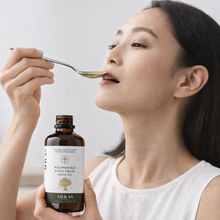
The protocol is simple: one teaspoon of Arkas on an empty stomach each morning. It does not require restructuring a supplement routine. It requires adding one consistent habit to it — and keeping it for 90 days.
References & Sources
- Ministry of Health Singapore. Healthier SG — A National Strategy to Shift towards Preventive Care. MOH White Paper, 2022. moh.gov.sg/healthiersg
- Liguori I, Russo G, Curcio F, et al. Oxidative stress, aging, and diseases. Clinical Interventions in Aging. 2018;13:757–772. PMID: 29731617. DOI: 10.2147/CIA.S158513
- Ministry of Health Singapore. Singapore Health Facts — Health Expenditure. MOH Statistics, 2023. moh.gov.sg
- International Olive Council. World Olive Oil Figures — Consumption by Country. IOC Market Newsletter No. 79 (2024). internationaloliveoil.org
- Bendini A, Cerretani L, Carrasco-Pancorbo A, et al. Phenolic molecules in virgin olive oils: a survey of their sensory properties, health effects, antioxidant activity and analytical methods. Molecules. 2007;12(8):1679–1719. PMID: 17960082. DOI: 10.3390/12081679
- European Commission. Commission Regulation (EU) No 432/2012 of 16 May 2012 establishing a list of permitted health claims made on foods. Official Journal of the European Union, L 136, 25.5.2012. eur-lex.europa.eu
- Périard JD, Racinais S, Sawka MN. Adaptations and mechanisms of human heat acclimation: applications for competitive athletes and sports. Scandinavian Journal of Medicine & Science in Sports. 2015;25(S1):20–38. PMID: 25943648. DOI: 10.1111/sms.12408
- Martínez-González MÁ, Gea A, Ruiz-Canela M. The Mediterranean diet and cardiovascular health: a critical review. Circulation Research. 2019;124(5):779–798. PMID: 30817261. DOI: 10.1161/CIRCRESAHA.118.313348
- Estruch R, Ros E, Salas-Salvadó J, et al. Primary prevention of cardiovascular disease with a Mediterranean diet supplemented with extra-virgin olive oil or nuts. New England Journal of Medicine. 2018;378(25):e34. PMID: 29897866. DOI: 10.1056/NEJMoa1800389
- Brenes M, García A, Dobarganes MC, Velasco J, Romero C. Influence of thermal treatments simulating cooking processes on the polyphenol content in virgin olive oil. Journal of Agricultural and Food Chemistry. 2002;50(21):5962–5967. PMID: 12358463. DOI: 10.1021/jf020506w
- EFSA Panel on Dietetic Products, Nutrition and Allergies (NDA). Scientific Opinion on the substantiation of health claims related to eicosapentaenoic acid (EPA), docosahexaenoic acid (DHA) and maintenance of normal blood triglyceride concentrations. EFSA Journal. 2010;8(10):1796. DOI: 10.2903/j.efsa.2010.1796
One of the High Polyphenol EVOOs Available in Singapore
Arkas High Polyphenol EVOO is available in Singapore through RealFUEL+. Independently tested at >800mg/kg total polyphenols. EU 432/2012 compliant concentration. Certificate of Analysis available on request.
One teaspoon. Every morning. Kick start your 90-day wellness habit now.
Read the full series:
→ Post 01: The Science Behind High Polyphenol Olive Oil
→ Post 02: High Polyphenol vs Regular EVOO — Why the Label Tells You Nothing
→ Post 03: The 90-Day Olive Oil Challenge — What the Science Says
Educational note: This article is intended as general wellness information only. It does not constitute medical advice, diagnosis, or treatment. Arkas EVOO is a food product, not a medicine. Health-related research referenced here reflects findings from independent scientific studies and does not imply that the same outcomes will occur in all individuals. Consult your doctor before starting any new supplement protocol, especially if you are on medication or have an existing health condition.
Frequently Asked Questions
Where can I buy high polyphenol olive oil in Singapore?
Arkas High Polyphenol EVOO is available in Singapore through RealFUEL+ (realfuelplus.com).
Many supermarket EVOOs are designed and marketed primarily as culinary oils. They may be perfectly suitable for cooking or general diet use, but unless the bottle provides batch-specific polyphenol testing, the actual polyphenol concentration is not confirmed.
Is high polyphenol olive oil only for athletes?
No. Oxidative stress is a universal biological process that is associated with aging, chronic disease risk, and environmental exposure — not exclusive to people who train.[2] A daily polyphenol habit is as relevant for a 55-year-old managing cardiovascular health as it is for a 30-year-old runner. Singapore's aging population and preventive health framework make consistent daily wellness habits broadly applicable across age groups.[1]
Does Singapore's tropical climate make polyphenol supplementation more relevant?
It adds a layer of relevance for those who exercise outdoors. Training in Singapore's heat and humidity is associated with higher physiological strain than equivalent training in temperate conditions,[7] which may compound the oxidative stress load the EU 432/2012 polyphenol mechanism addresses.[6] That said, the core wellness rationale applies regardless of whether you train — it is about long-term antioxidant support, not athletic performance.
Can I take Arkas EVOO alongside my existing supplements?
Yes. Arkas EVOO is associated with oxidative protection of blood lipids via polyphenol activity — a distinct mechanism from omega-3 fish oil, protein, magnesium, or electrolyte supplements.[6] It is complementary to an existing daily wellness routine. Consult your doctor if you are on medication or have existing health conditions.
How is Arkas different from olive oils sold in Singapore supermarkets?
Three documented differences: polyphenol concentration (>800mg/kg vs typically 50–150mg/kg for supermarket EVOO),[5] independently verified by third-party HPLC laboratory analysis with a Certificate of Analysis available on request; single-origin Olympia variety from Olympia, Greece — not a blended multi-origin product; and positioned specifically as a daily wellness supplement, not a cooking oil.
